Spot welding (heat staking) machine with zero stringing, burn, and flash IMPULSE WELDER

No adhesive or screws needed. Our proprietary instantaneous heating and cooling method
delivers a clean finish with no stringing, burn, or flash.
Start with a free demonstration.

Contact Us

PROBLEM

Facing these challenges in
joining or fastening parts?

  • Persistent stringing and burn marks make quality unstable
  • Long adhesive curing times and heavy management workload
  • Areas outside the weld get burned
  • Risk of residual screws or adhesive
  • Smoke and gas worsen the work environment
  • Finish and quality vary with environmental changes
  • Inconsistent results in multi-point welding
  • Heaters take a long time to warm up

SOLUTION

Munekata's IMPULSE WELDER
solves these challenges.

The IMPULSE WELDER is heat staking system with instantaneous heating and cooling which is safe, stable and energy-saving. It is also environmental friendly in terms of easy recycle of parts. The method is patented. With no adhesive or screws, the process stays clean. It solves on-site challenges while reducing environmental impact at the same time.
SOLUTION.1

Quality and finish

  • Zero burn and stringing. The welded surface is uniform and clean
  • Low residual stress means less loosening and fewer quality issues over time
  • Adjustable heating and cooling times allow optimal settings for each material

SOLUTION.2

Safe and energy-saving

  • Instantaneous current flow means no wasted power and lower energy use
  • Current flows only at the moment of welding, so the heat risk to operators is low
  • No adhesive or solvent, so there is no risk of handling hazardous substances

SOLUTION.3

Clean and comfortable

  • No mechanical noise
  • No odor, smoke, or gas, so a clean work environment is maintained
  • No adhesive or solvent, so it can be used in medical and food environments

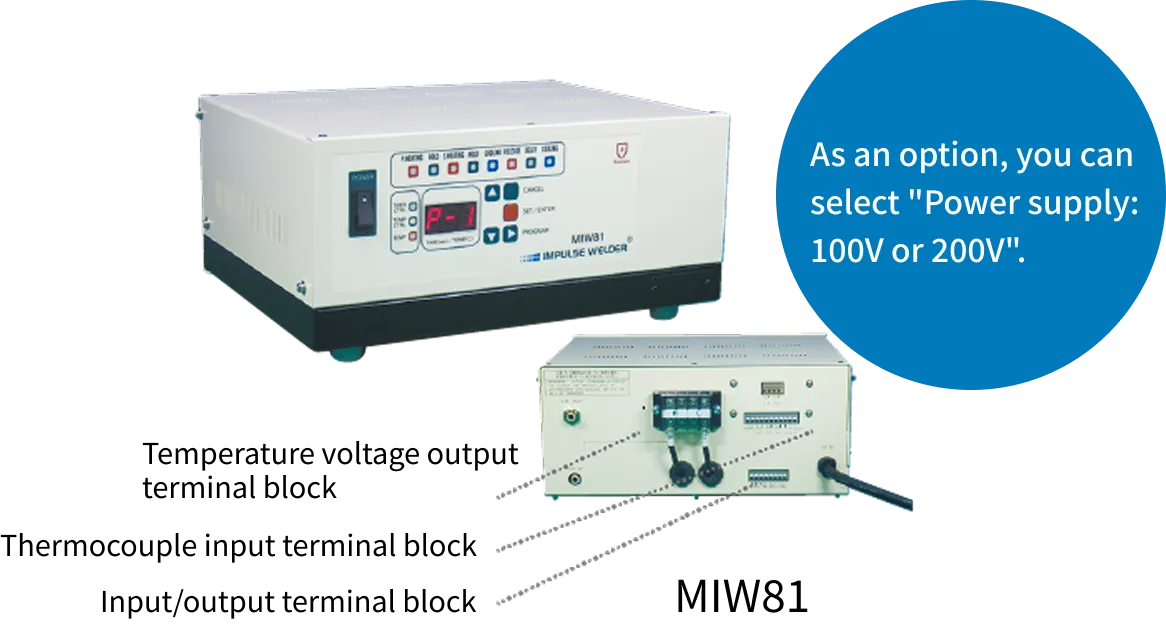
[Spot welding (heat staking) machine]
The mechanism of IMPULSE WELDER

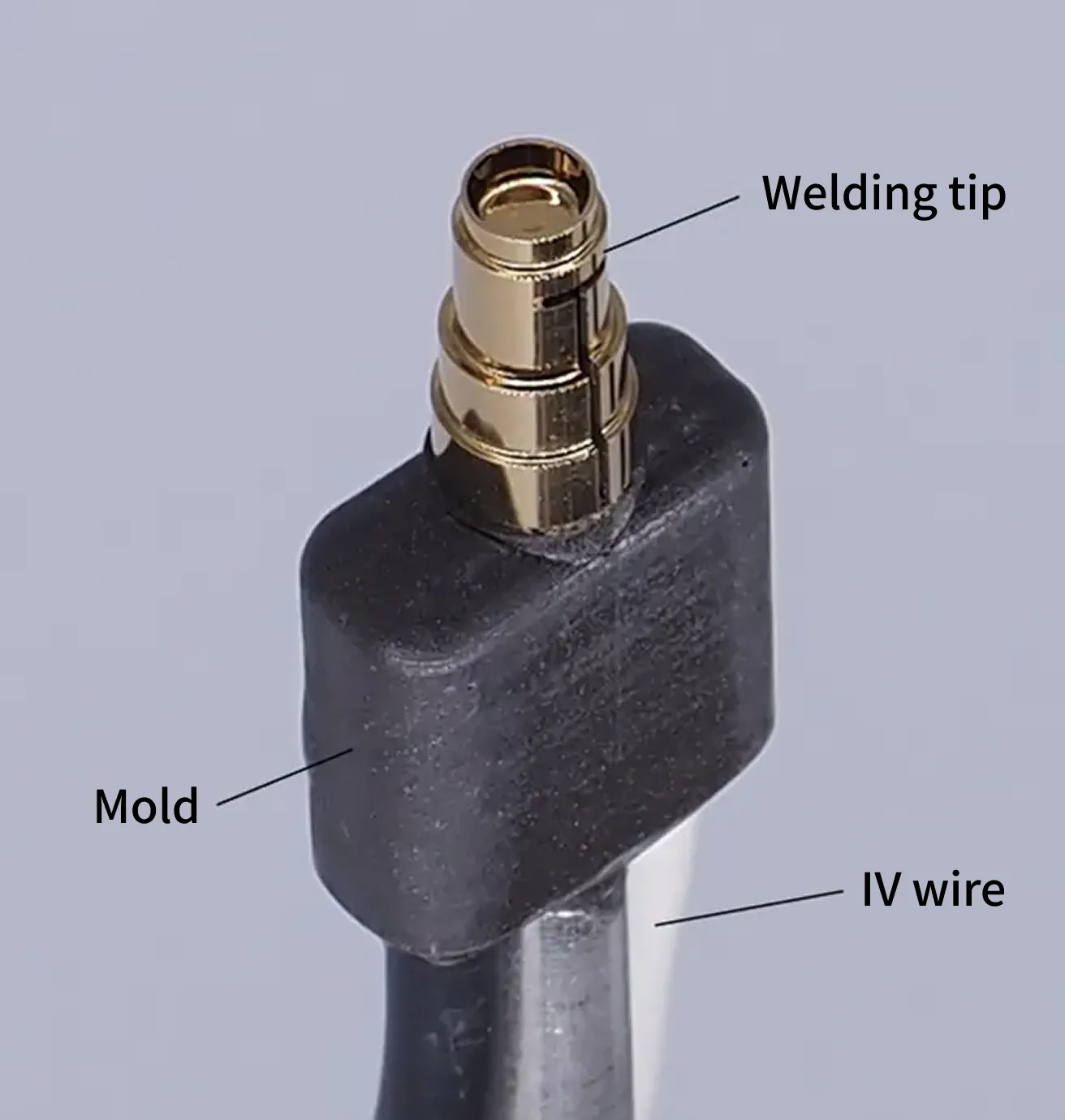
The IMPULSE WELDER uses instantaneous heating and cooling to join parts cleanly, quickly, and reliably. Apply electrical current to heat tip and heat tip is heated up by Joule heat. After melting and forming thermoplastic, cool air blows solidify plastic. Many points can be staked simultaneously. Even 100 points in the same time as 1 point.(Time may vary with size of heat tip) The finish has no stringing or burn. Quality improves without reducing line efficiency.

Comparison with other methods

Laser welding High-frequency welding Ultrasonic welding Heat staking
(IMPULSE WELDER)
Welding principle Absorption of laser light High-frequency dielectric heating Frictional heat from vibration Joule heat of the heat tip
Effect on the product Effect of laser light Effect of electromagnetic waves Effect of vibration Extremely low
Applicable materials A transmissive material and an absorptive material must be paired (color is limited) Limited to certain dielectrics such as PVC and nylon Works with many plastics, but compatibility with the horn varies Proven with many thermoplastics. Glass fiber content up to about 30% (guideline)
Stability of quality Small differences in environment or material color easily cause burn or incomplete welding Easily affected by the electrical properties of the material, and hard to adjust Heat comes from friction, so temperature control is not possible and variation is likely Temperature control keeps quality constant (high repeatability)
Best applications Fine parts where appearance matters Film and sheet Simple shapes, high-speed mass production Precision circuit boards, multi-point welding, medical devices, etc.

USE CASE

IPW examples of use

The IMPULSE WELDER is already building a record in a range of applications. It can accommodate all kinds of needs depending on how it is used.
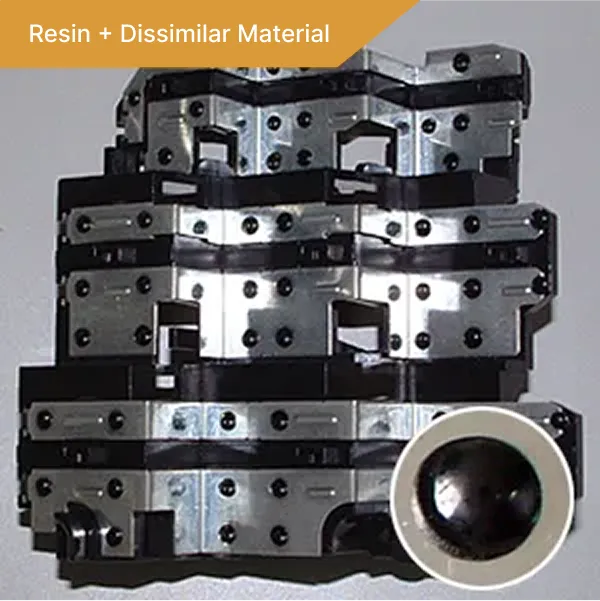
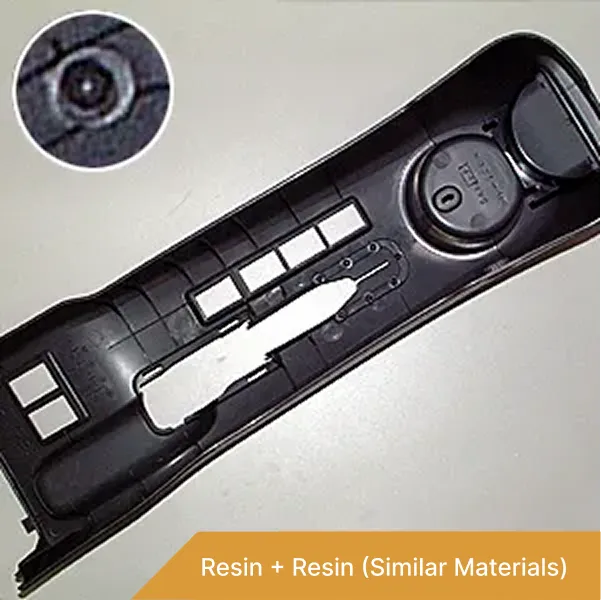
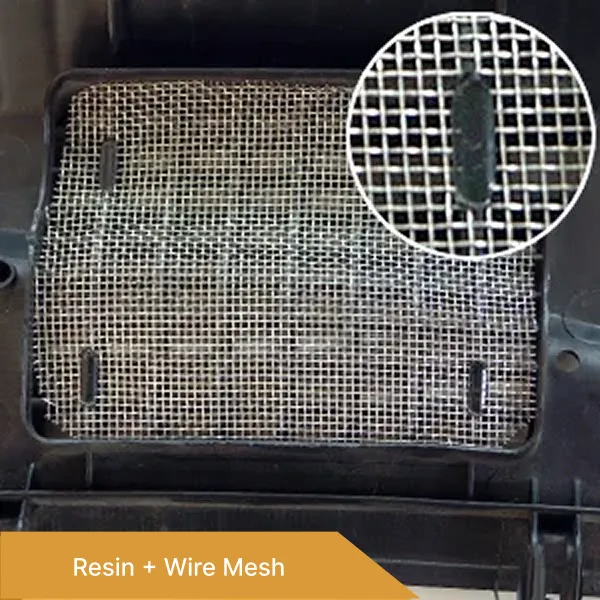
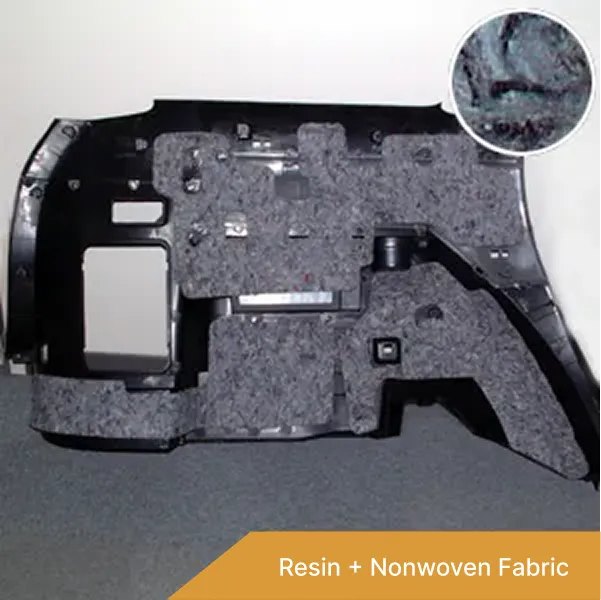
It flexibly handles combinations of different materials, such as plastic + plastic, plastic + metal, and plastic + nonwoven fabric.

Click to see sample photo

Plastics + plastic, metal, printed circuit board, rubber and so on (dissimilar materials)

Most common usage. Different "a" and "b" material can be staked. Low pressure leaves little impact on the surface.

Plastic + plastic (same plastic)

Deeply melting "a" to fuse with "b". Good sealing result achieved.

Plastic + metal mesh

Staking without making holes in metal mesh.

Plastic + fibrous material

Bond by plastic melted into fibrous structure and solidified.

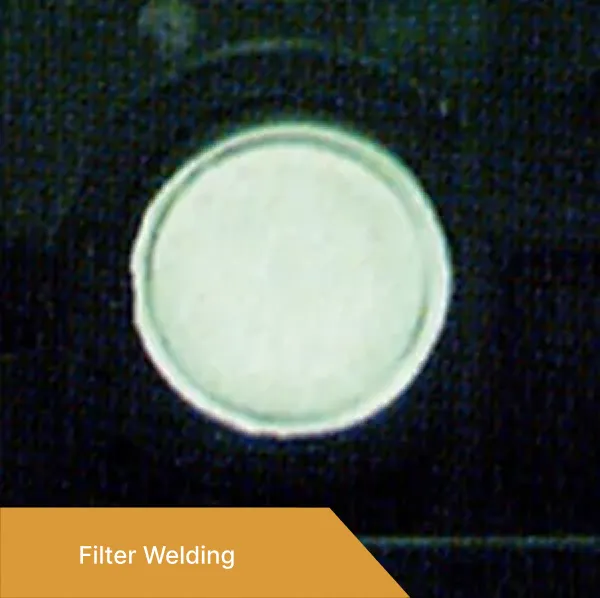
Plastic + membrane filter

Stake by heating directly from the top of the filter.

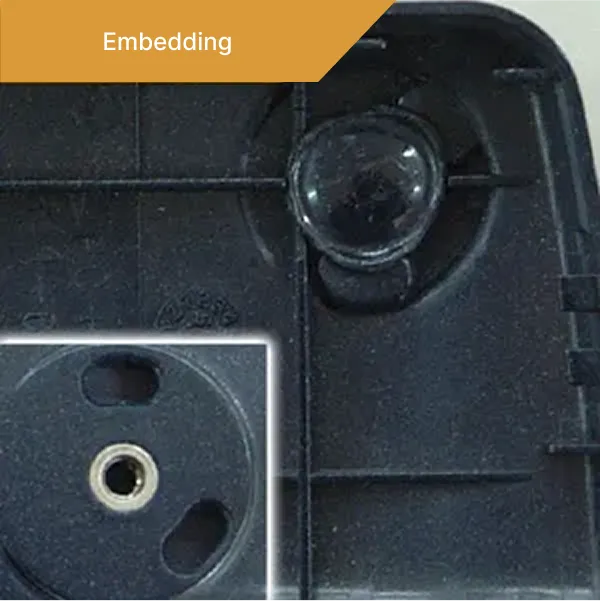
Embedding

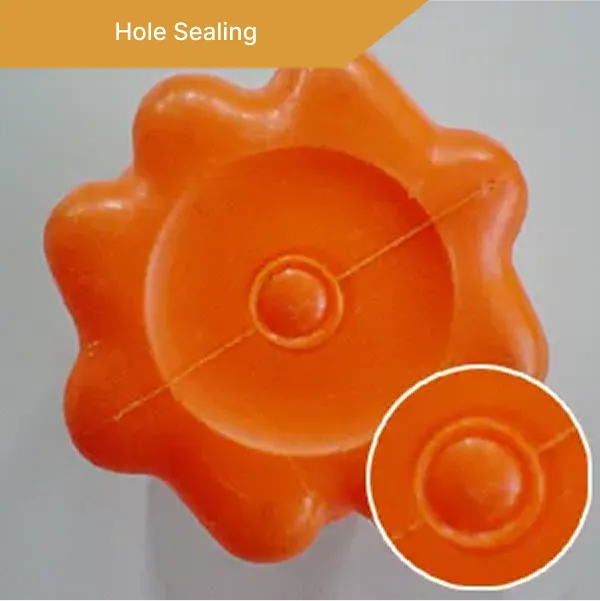
Embed flanged nut and seal hole.

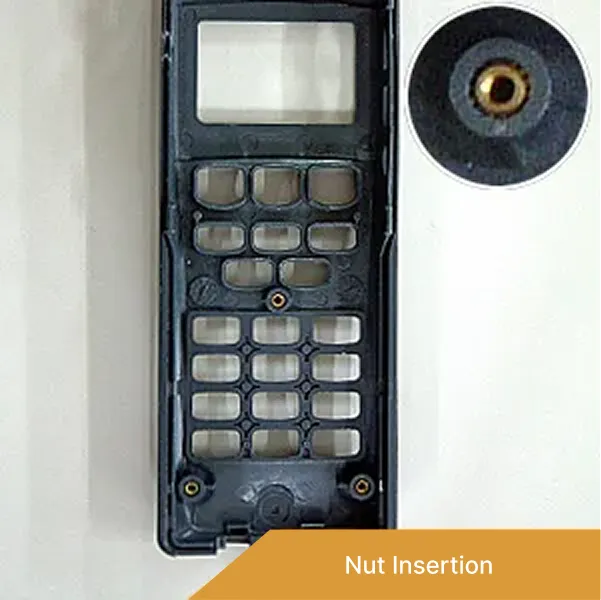
Insert nut

Hot press insert nut.

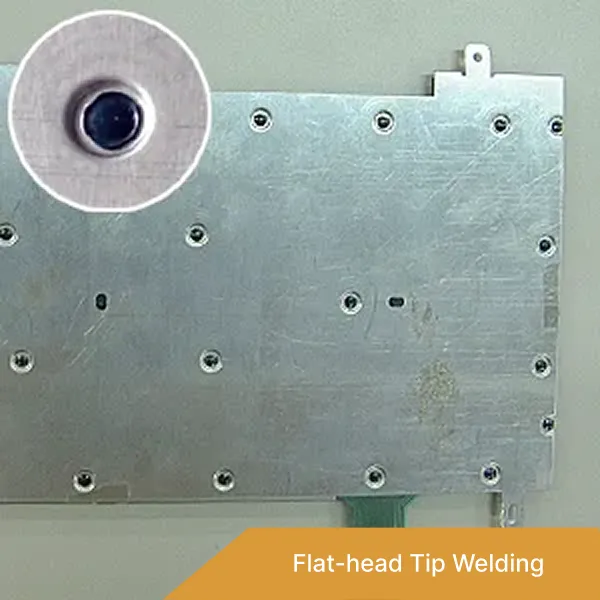
Flat head tip staking

Flat head (even surface) staking at concave section or chamfered section.

Sealing hole

Seal air hole of blow moldings.

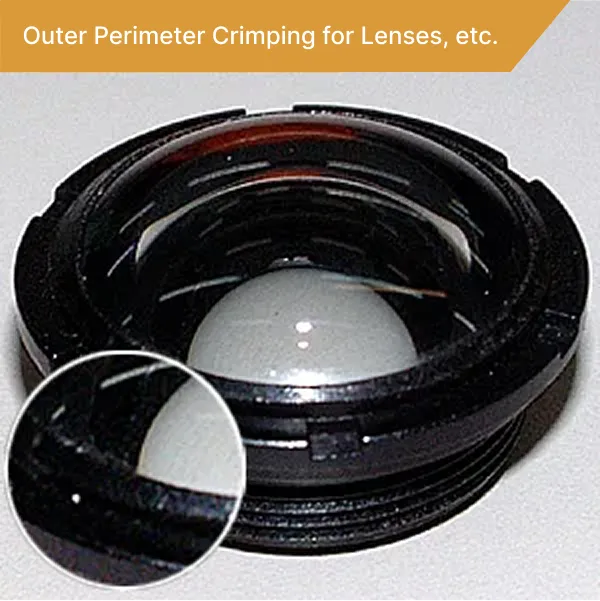
Rim swaging

Rim swaging to lock parts in position.

Applicable plastics: ABS, PP, PS, PE, PC, POM, PMMA, PBT, ABS/PC, PPS, PPA, PET, PA etc

Applicable for plastic with glass-fiber.(need detailed study) The above is based on our welding track record to date.

Features

    Examples of use

    Feel free to contact us.

    If you would like to check whether it works with your parts, including applicable materials and welding patterns,
    please feel free to contact us. Free demonstrations are available.

    Technical Data

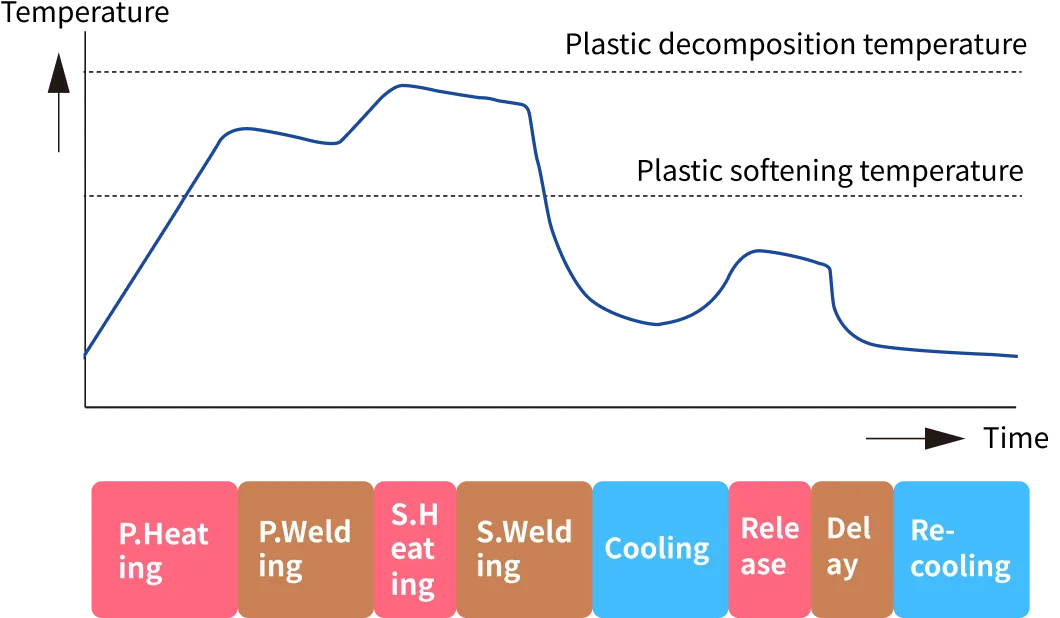
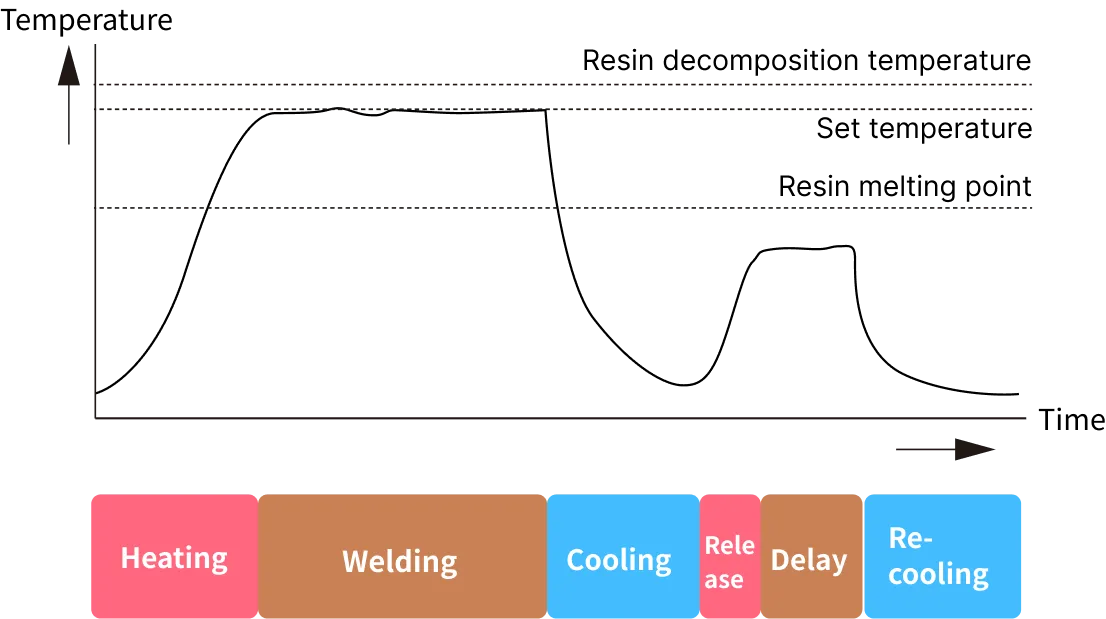
    Here is how the Impulse Welder controls the conditions of welding. The roles of each process are described below.
    There is no stringing, burn, or flash because heating and cooling are controlled precisely.
    The IMPULSE WELDER offers two control methods to achieve optimal welding conditions for each material and part.

    Timer control method

    1. 1. Primary heating The heat tip generates the heat needed to melt the thermoplastic.
    2. 2. Primary welding Heat from primary heating is transferred to the thermoplastic.
    3. 3. Secondary heating Thermoplastics that are hard to weld, and large bosses, are heated again here.
    4. 4. Secondary welding Heat from secondary heating is transferred to the thermoplastic.
    5. 5. Cooling Air cools the heat tip and the boss and solidifies the thermoplastic.
    6. 6. Release heating The heat tip is heated again so it separates easily from the thermoplastic.
    7. 7. Delay The thermoplastic and the heat tip separate during this step.
    8. 8. Re-cooling The heat tip, heated by release heating, is cooled.

    Temperature control method

    1. 1. Heating The heat tip is heated to the set temperature. Temperature at heating, release heating, and cooling completion can be set.
    2. 2. Welding Temperature is held while heat is transferred to the thermoplastic. Stable heating and welding are possible.
    3. 3. Cooling Air cools the heat tip and the thermoplastic and solidifies it.
    4. 4. Release heating The heat tip is heated again to the set temperature so it separates easily from the thermoplastic.
    5. 5. Delay While heat is still transferring, the heat tip is pulled away from the melted thermoplastic.
    6. 6. Re-cooling The heat tip, heated by release heating, is cooled. Power supply voltage fluctuation can also be addressed (using limits for fluctuation).

    Power control method

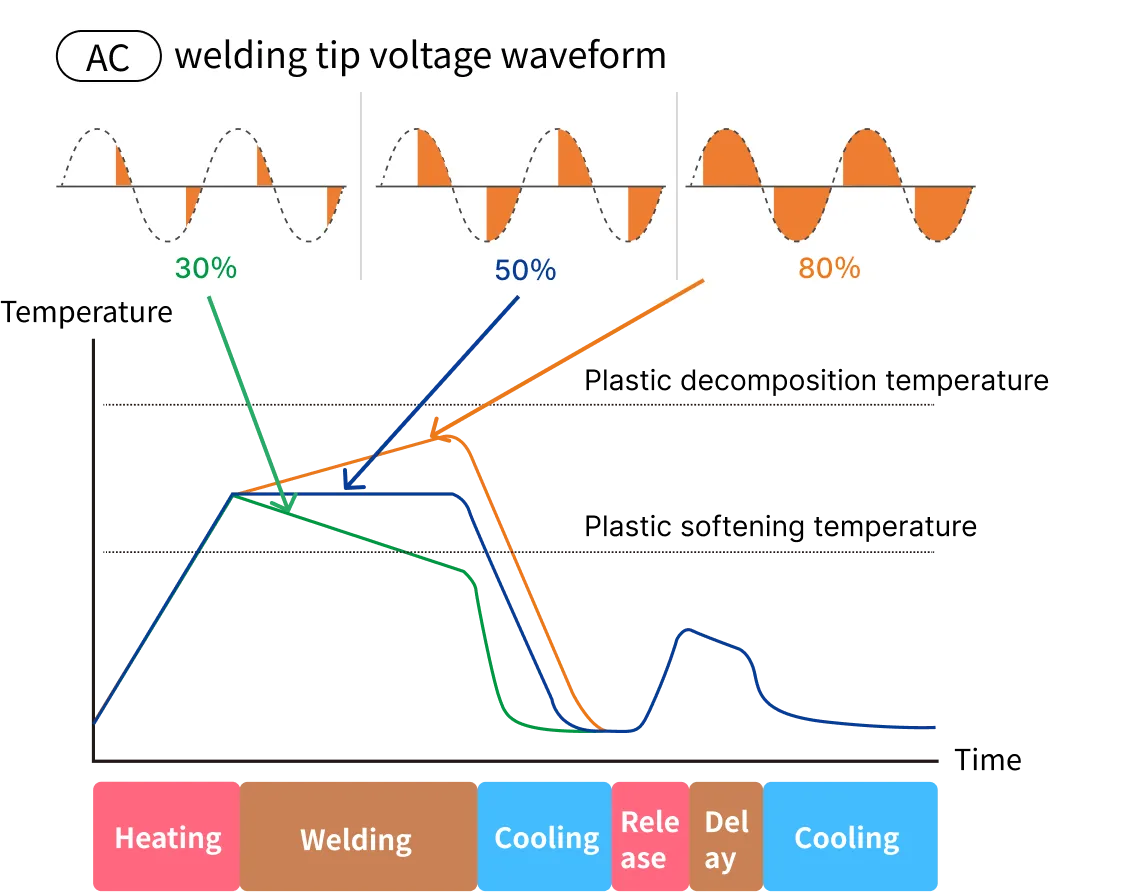
    Phase (power control) method

    Phase (power control) method: heat tip temperature profile

    Heating is possible both for heating and for welding. Input by timer is possible individually for heating, welding, and cooling. Phase control level (heating) setting can be used to change the angle of temperature rise. Also, phase control level (welding) can be used to maintain a stable temperature for the welding time. The roles of the processes are the same as in the timer control method.

    The front or rear of each half-cycle of the AC waveform is cut to control the effective voltage applied to the load and adjust heater power.

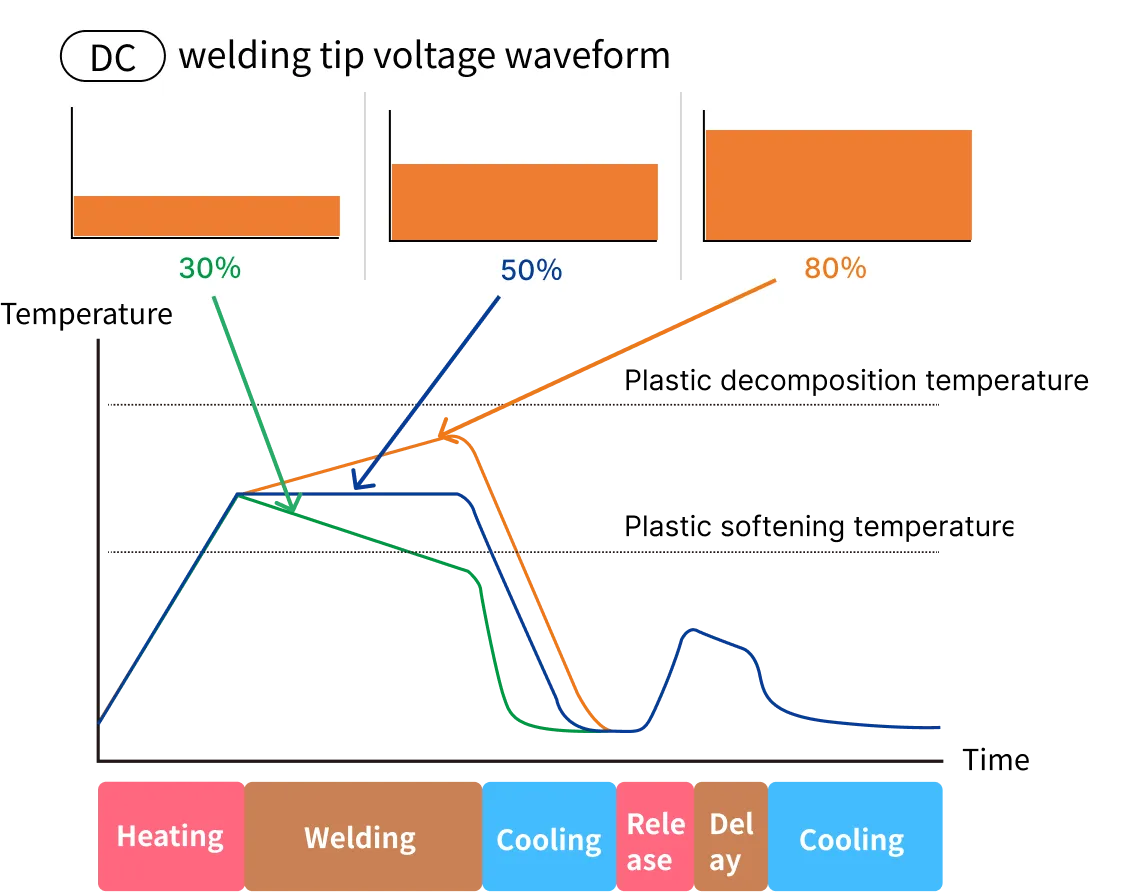
    DC method

    DC method: heat tip temperature profile

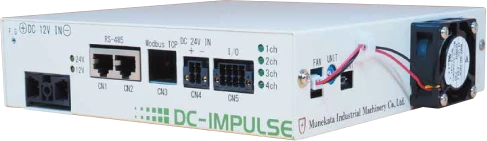
    Our proprietary product: DC-IPW

    1. Improved quality stability
    2. Easier maintenance
    3. Greener and more energy-efficient

    Comparison of control methods

    Transformer timer control New DC-DC timer control Transformer temperature control
    Heating method Heating timer control, AC transformer Heating timer control, DC-DC converter Temperature PID control, AC transformer
    Power supply AC transformer DC-DC converter AC transformer
    Features The simplest and lowest-cost structure. Operated by timer settings only. A phase-control type is also available. Voltage is held constant, so it resists power-supply fluctuation. Among timer types, it is highly stable. Feedback control manages temperature directly. It prevents over-melting and insufficient staking.
    Suitable applications Lower-cost products that do not need high precision, and thermoplastic parts that are easy to weld. Great cost advantage for multi-point welding. Assembly of electronic parts that need moderate precision. High-precision uses such as medical devices, automotive parts, and staking of fine terminals.

    Product lineup

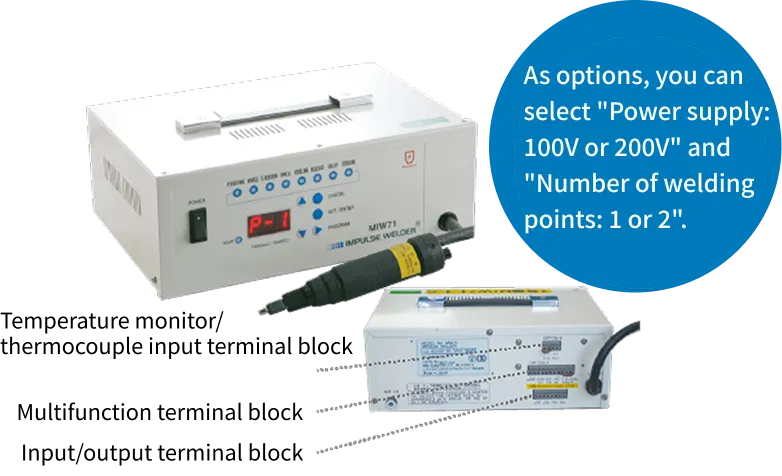
    Handy Machine

    + hand grip
    + [Slide unit] + lever press, robot.
    + [Slide unit] + Built in the equipment.
    See the catalog for specifications.

    Multiple Points Machine

    Large numbers of points can be welded simultaneously in a short time and with high reliability. Make to order, the machines can be built to your specifications. Please feel free to contact us.

    See product specifications in the catalog.

    FAQ

    Can I check whether it works with our materials and parts?

    We offer free demonstrations. Bring your actual parts and we can run a welding test. Please feel free to contact us.

    Are there plastics you cannot weld?

    Thermosetting plastics cannot be welded. In principle, any thermoplastic can be handled, but we decline PVC because it generates toxic gas. We offer free demonstrations. Bring your actual parts and we can run a welding test. Please feel free to contact us.

    Do you support multi-point welding?

    Many points can be staked simultaneously. Even 100 points in the same time as 1 point.(Time may vary with size of heat tip) As long as the heat tips can be physically arranged, all welding points can be welded simultaneously. Welding from multiple directions is also possible, so please consult us.

    How often do heat tips need replacing?

    It depends on usage. As a guide, standard heat tips (IHT-X series) last about 200,000 shots, and special machined heat tips (IHT-S series) about 300,000 shots. Some customers have used them even longer.

    Can it be built into an existing line?

    Yes. It can be built in the equipment. We design and install systems to suit your site, taking into account process balance with upstream and downstream processes and safety standards. Details are worked out through a series of meetings. Please feel free to tell us about your current line issues and the space you are considering.

    How much does it cost to introduce?

    Since we design each machine to your specifications, costs vary. Please contact our sales department via the inquiry form.

    What is the process from demonstration to installation?

    The standard process is: Inquiry → Technical introduction (demonstration) → Confirmation of specific themes and requirements → Prototyping → Adoption review → Specification meeting → Quotation → Order → Design start → Design review → Production after approval → Factory acceptance test at our facility → On-site installation → Post-delivery follow-up.